How Does Physical Therapy Help Low Back Pain?
Physical therapy focuses on improving how your body moves and functions.
At Physical Therapy Now, an evaluation may include an assessment of your spinal mobility, hip movement, muscular strength, neurological function, walking patterns, and the activities that reproduce your symptoms.
Your physical therapist will also discuss how your pain affects your work, sleep, exercise, and daily activities.
Depending on your examination findings, your personalized treatment program may include:
1. Manual Physical Therapy
Hands-on treatment may help improve mobility and temporarily reduce discomfort when appropriate.
Your physical therapist may use specific joint mobilization or soft-tissue techniques as part of a broader rehabilitation program.
Manual therapy is generally most useful when combined with active treatment rather than used as the only intervention.
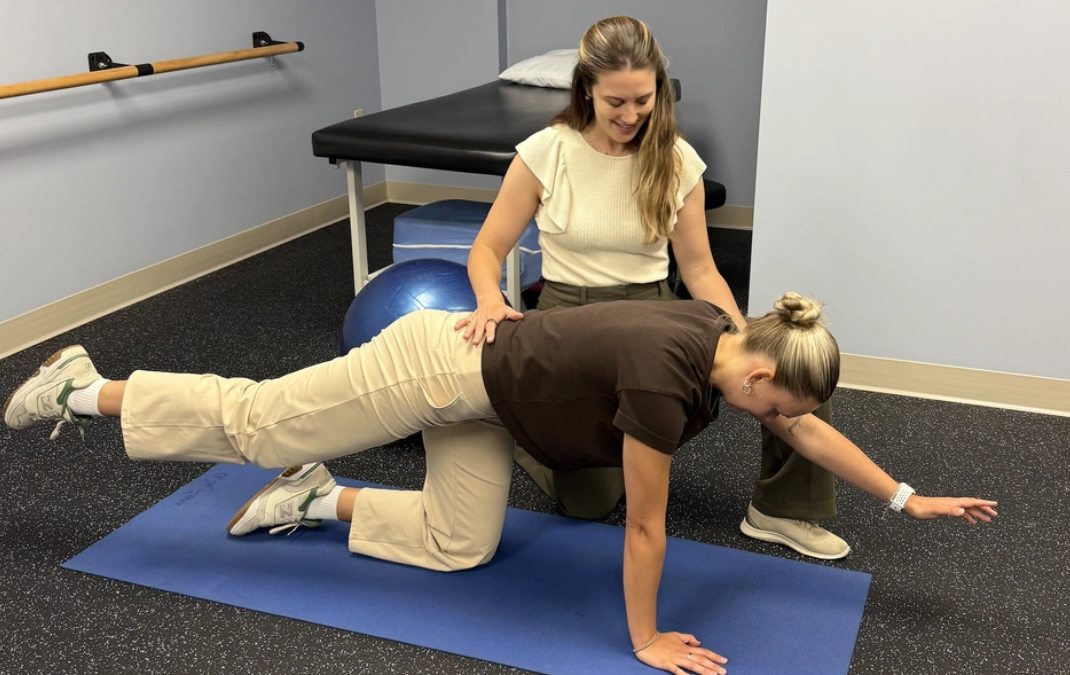
2. Core and Hip Strengthening
Your abdominal, back, hip, and leg muscles all contribute to your ability to perform everyday activities.
A personalized strengthening program can improve muscular endurance, movement control, and tolerance for lifting, bending,
walking, and other activities.
The goal is not simply to strengthen one muscle. It is to prepare your body for the movements you need to perform.
3. Mobility and Movement Retraining
Some patients have difficulty bending forward, extending their backs, rotating, or moving comfortably after sitting.
Your physical therapist can identify movement limitations and help you progressively restore mobility while adjusting exercises
according to your symptoms.
4. Education and Long-Term Recovery Planning
Understanding your condition can be an important part of recovery.
At PTN, we want patients to understand what may be contributing to their symptoms, what activities they can safely perform,
and how their rehabilitation program progresses.
Pain reduction is an important milestone, but it does not always mean that your strength, endurance, and activity
tolerance have fully recovered.
We work toward lasting functional improvements—not just temporary symptom relief.
Can Physical Therapy Help Sciatica and Pain Traveling Down the Leg?
Yes. Physical therapy may help many people experiencing low back pain with associated buttock or leg symptoms.
Sciatica commonly refers to pain traveling from the lower back or buttock into the leg. Symptoms may include burning pain,
tingling, numbness, or discomfort when sitting and walking.
Potential contributing conditions include irritated spinal nerves, disc problems, and other lumbar spine conditions.
Treatment depends on your symptoms and examination findings. Your physical therapist may recommend specific movements,
strengthening exercises, activity modifications, and other appropriate interventions.
However, new or worsening weakness, significant neurological changes, or rapidly progressing symptoms require prompt
medical evaluation.
For additional information about possible causes, read our guide: 5 Common Reasons for Low Back Pain—and What to Do
Next.
What Happens During Your First Physical Therapy Visit?
Your first visit at PTN is designed to help us understand your problem and develop a practical treatment strategy.
We begin by discussing your symptoms, medical history, personal goals, and the activities you are having difficulty performing.
Depending on your condition, your examination may include:
- Postural and movement observations.
- Lumbar spine and hip range-of-motion testing.
- Strength and functional movement testing.
- Neurological screening when indicated.
- Assessment of joint mobility and movement limitations.
- Discussion of work, sports, and daily activity demands.
After your evaluation, your physical therapist will explain the findings and discuss a recommended treatment plan.
We want you to understand not only what the plan includes, but also why each part matters.
How Long Does It Take for Lower Back Pain to Improve With Physical Therapy?
There is no single recovery timeline that applies to everyone.
Some people experience meaningful improvements within a relatively short period, while others with persistent pain, nerve-
related symptoms, or significant functional limitations may require a longer rehabilitation program.
Your expected recovery depends on factors such as your condition, the duration of your symptoms, your activity limitations, and
your response to treatment.
At PTN, the focus is on measuring meaningful progress: walking farther, sleeping more comfortably, returning to exercise,
tolerating work activities, and moving with greater confidence.
When Should You See a Physical Therapist for Lower Back Pain?
Consider scheduling an evaluation if:
- Your lower back pain keeps coming back.
- You have difficulty sitting, standing, walking, or sleeping.
- Your pain is limiting work, exercise, or sports.
- You feel stiff, weak, or unable to move normally.
- Back pain travels into your buttock or leg.
- Your symptoms are not improving as expected.
- You want a personalized plan to return safely to normal activities.
You do not have to wait until your pain becomes severe to ask for help.
When Is Back Pain an Emergency?
Some symptoms require medical attention rather than a routine physical therapy appointment.
Seek emergency care for new loss of bowel or bladder control, numbness around the groin or saddle area, or rapidly
progressing leg weakness. Severe back pain following significant trauma also requires urgent evaluation.
Back pain accompanied by fever, unexplained weight loss, or other concerning systemic symptoms should be assessed
promptly by a medical professional.
Do You Need a Physician Referral for Physical Therapy in Pennsylvania?
Not necessarily.
Pennsylvania permits qualified physical therapists to provide care through direct access, subject to state requirements.
Whether you need a physician referral or prescription may also depend on your insurance plan and the clinician providing your treatment.
Our team can help you understand the appropriate scheduling and insurance requirements.
Learn more in our article: Do I Need a Referral for Physical Therapy in Pittsburgh?.
Frequently Asked Questions About Lower Back Pain
Is walking good for lower back pain?
Walking is often a helpful, low-impact activity for people with uncomplicated low back pain. Start with a comfortable distance and
adjust your activity if symptoms significantly worsen.
Should I rest when my back hurts?
A brief reduction in painful activities may be appropriate, but prolonged bed rest is generally discouraged. Gentle movement and
a gradual return to normal activity are often recommended.
What exercises are best for lower back pain?
There is no single exercise that is best for everyone. Your physical therapist may recommend specific trunk strengthening, hip
exercises, mobility exercises, or aerobic activity depending on your findings.
Can physical therapy help chronic lower back pain?
Yes. Evidence-based guidelines support exercise-based physical therapy for many people with persistent or chronic low back
pain. An individualized program can improve function and may reduce pain and disability.
Do I need an MRI before starting physical therapy?
Not always. Many people can begin with a clinical evaluation. Imaging may be appropriate when there are warning signs,
progressive neurological deficits, or other clinical reasons to investigate further.
Find Low Back Pain Physical Therapy Near You in Pittsburgh
At Physical Therapy Now, our goal is to help you return to the activities that matter most.
Whether you are struggling with lower back pain, sciatica, recurring stiffness, or difficulty returning to exercise, our team can
help evaluate your condition and develop an individualized plan. If you would like to discuss your issue please feel free to call
our office below.
We have two convenient Pittsburgh-area locations:
Physical Therapy Now — Fox Chapel / Glenshaw
3392 Saxonburg Boulevard, Suite 330
Glenshaw, PA 15116
Physical Therapy Now — Pittsburgh / Strip District
3117 Penn Avenue
Pittsburgh, PA 15201
Call (412) 406-8196 to schedule your physical therapy evaluation.
Contact Physical Therapy Now to discuss your symptoms and the appropriate next steps.
Your recovery begins with understanding the problem—and having a plan to address it.
Medical review: Michael Ricchiuto, MPT, MBA, Physical Therapist. This article provides general educational information and does not replace individualized medical advice, examination, or emergency care.
Clinical reference: Academy of Orthopaedic Physical Therapy — Clinical Practice Guidelines for Acute and Chronic Low Back Pain